Delivery time:50-60 days
Payment:30% T/T deposit,70% balance before shipping
Voltage:380V 50HZ 3Phase or based on customer’s need
Warranty:2 years for machinery warranty
Whatsapp: +86 18832797029
e-mail: yuankuoduan@gmail.com
Garage Door Panel Roll Forming Machine:
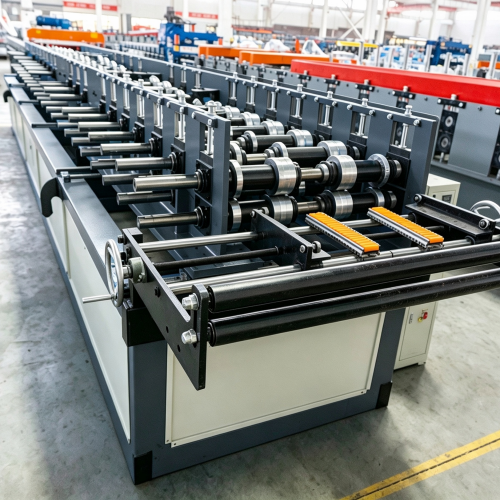
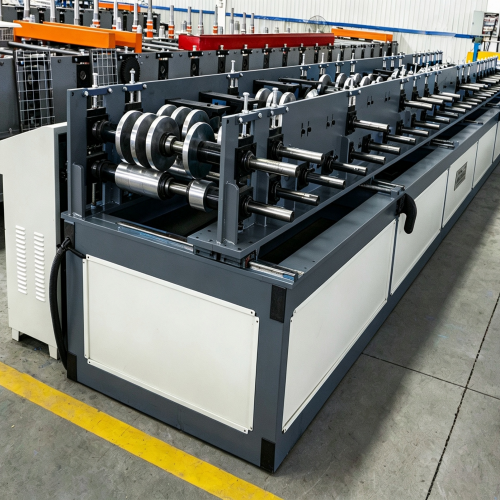
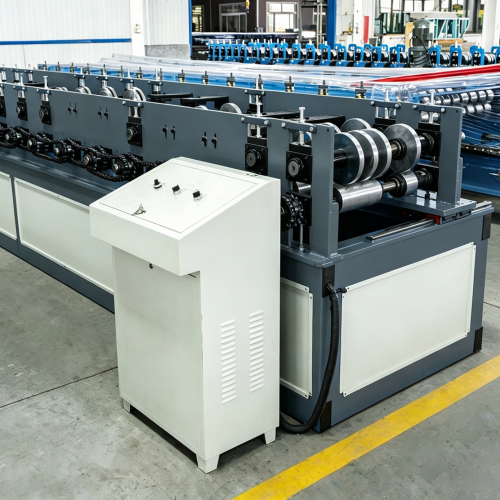
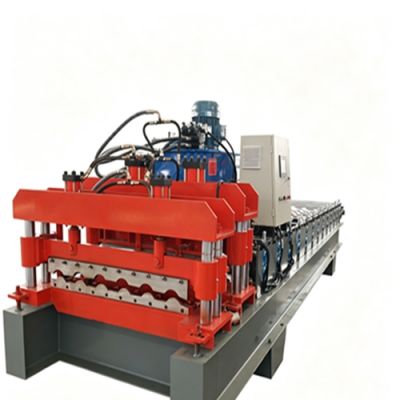
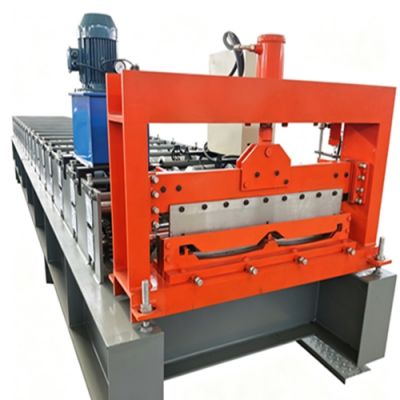
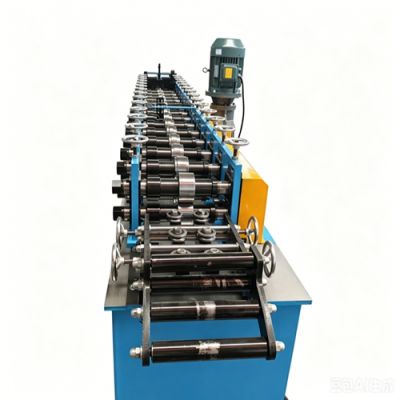
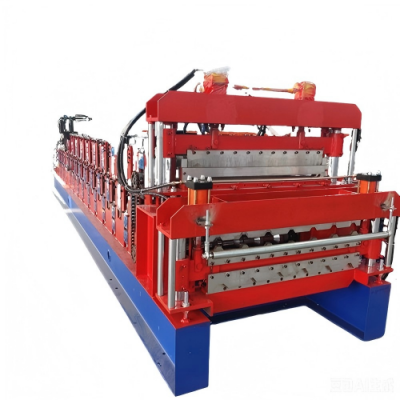
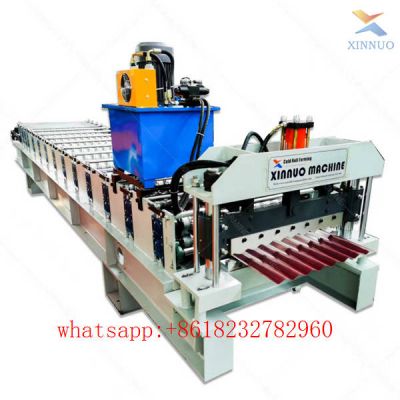
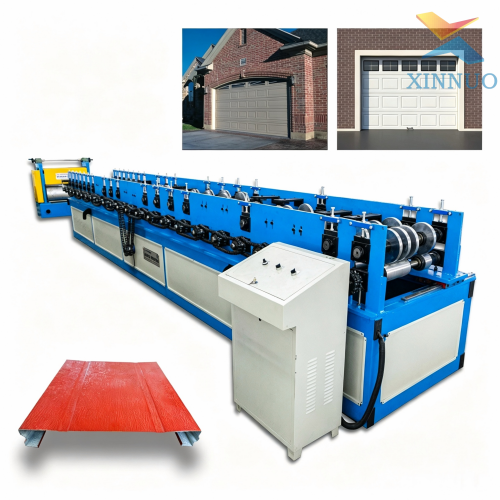
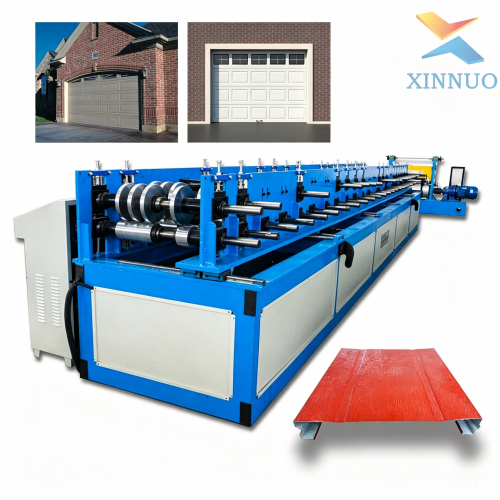
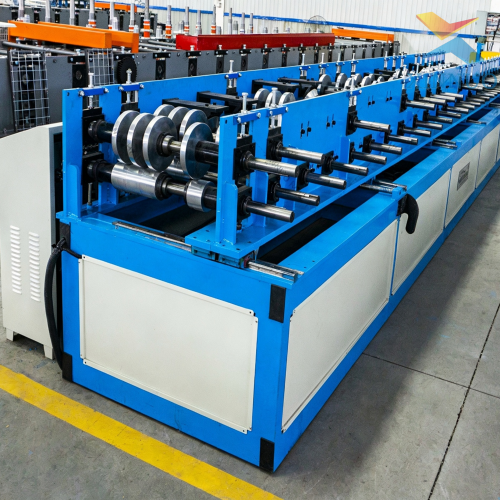
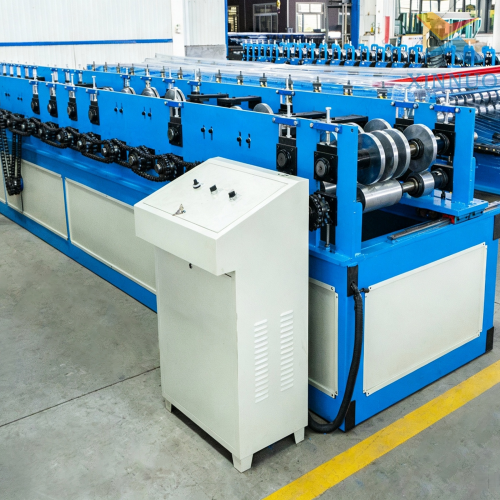
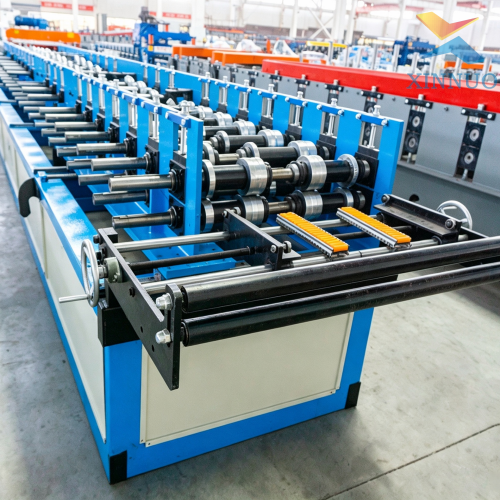
The XINNUO Garage Door Panel Roll Forming Machine is designed for the continuous cold forming of metal garage door panels and sectional door profiles. Based on the supplied images, the equipment features a long multi-station forming body, a powered transmission system, an independent control cabinet, and a dedicated roller arrangement for developing the required door-panel section. The finished panels can be used to manufacture garage doors for residential, commercial, workshop, warehouse, and other architectural applications.
Garage door panels require a carefully designed cross-section to balance appearance, strength, connection performance, and smooth movement during opening and closing. The forming rollers progressively shape the steel strip into the specified panel geometry, which may include flat surfaces, formed ribs, recessed sections, edge locks, hinge areas, or other customer-defined features. The final roller design must be developed from an approved cross-sectional drawing or physical sample so that the finished panel matches the intended garage door assembly.
The progressive forming process is especially important for garage door profiles because the panel must maintain consistent dimensions along its full length. Controlled forming helps reduce sudden material deformation and supports a clean surface finish. It also helps keep the edge connection, hinge position, panel width, and locking geometry within the required tolerance. For projects involving insulated sectional doors, the external steel profile should be coordinated with the panel core, sealing system, hinge structure, and installation method before the machine configuration is finalized.
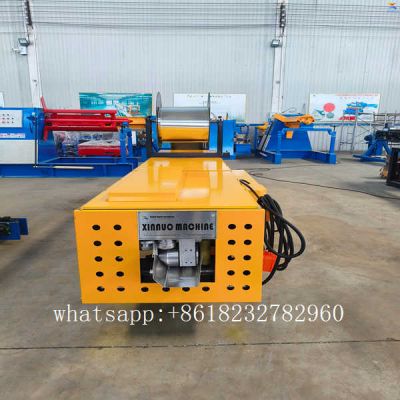
The machine can be engineered for suitable pre-painted or galvanized steel materials after the customer confirms the material grade, thickness range, strip width, yield strength, and surface coating. The entry section guides the strip into the forming line, while the transmission system keeps the roller stations synchronized during operation. A stable machine frame and properly aligned shafts support reliable forming performance and help reduce dimensional deviation during extended production. The exact drive method, roller material, motor configuration, and transmission components should be stated in the approved technical proposal rather than estimated from photographs.
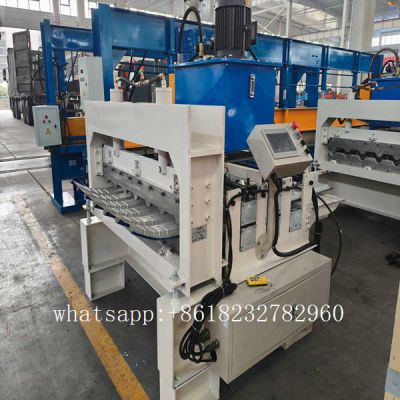
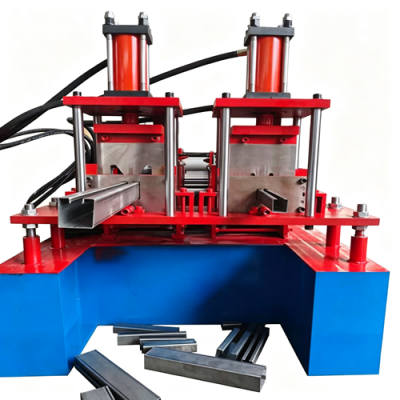
The control cabinet provides an organized operating interface for machine start, stop, speed adjustment, length setting, and production monitoring. The PLC, HMI, encoder, sensor, and automatic length-control configuration can be selected according to the customer’s production and automation requirements. The cutting unit may be configured for stop-to-cut or another approved cutting method, depending on the required panel length and tolerance. After forming and cutting, the completed garage door panels can be collected for stacking, packaging, insulation assembly, hinge installation, or final door production.
XINNUO supports customized garage door panel solutions for different architectural styles and market requirements. Customers may provide a panel drawing, door-section drawing, sample panel, or target installation description for engineering review. The technical team can evaluate the panel profile, effective width, feeding width, edge connection, hinge position, locking structure, material thickness, production speed, and cutting arrangement. This profile-based approach helps prevent the common mistake of selecting equipment only by the nominal panel width.
The Garage Door Panel Roll Forming Machine is suitable for manufacturers that require stable in-house production of customized door panels. Producing panels according to project requirements can improve production scheduling, shorten material preparation time, and support different door dimensions without relying entirely on external suppliers. The line layout can be planned according to the workshop space, coil-handling method, forming direction, cutting process, finished-panel collection, and connection with downstream insulation or assembly operations.